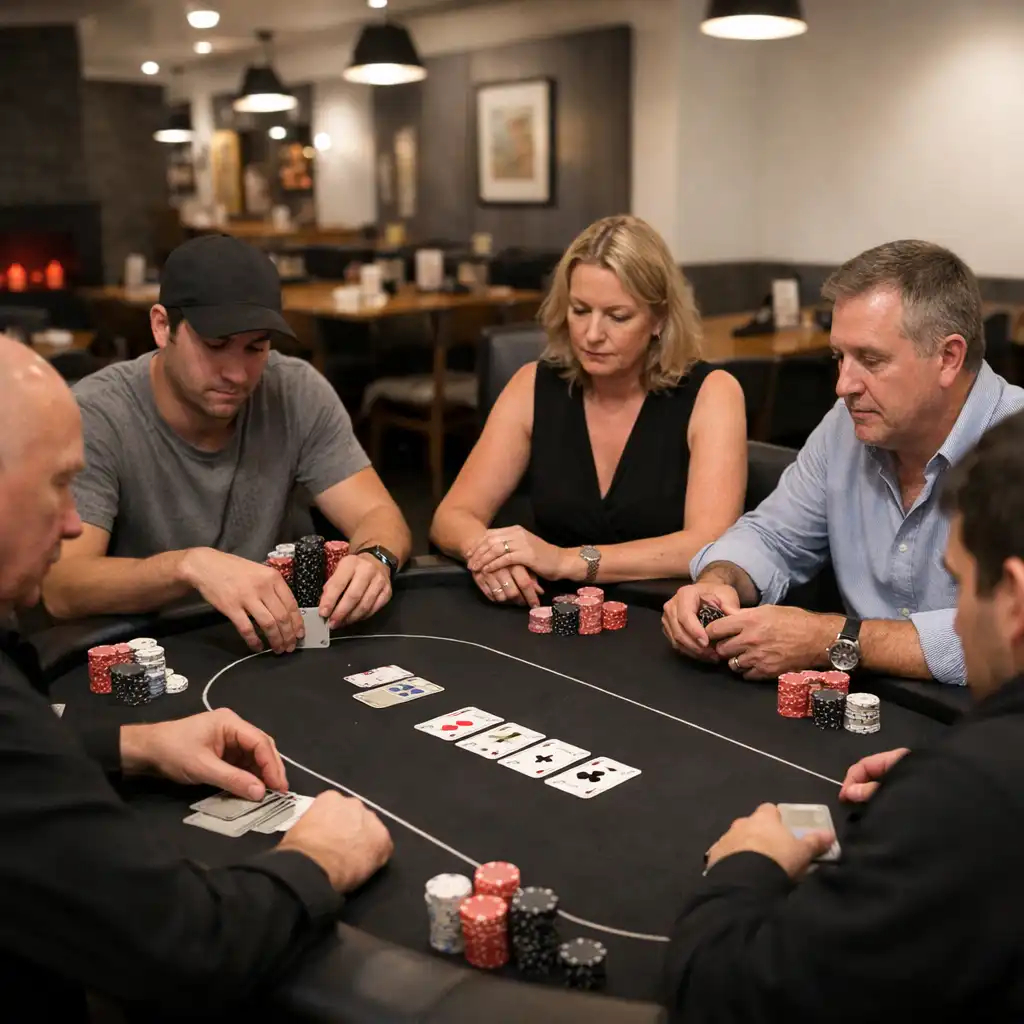
Guests gathered around a physical Texas Hold’em table in The Grand Hearth card room.
Physical Texas Hold’em table evening, The Grand Hearth, Melbourne
Card room / tournaments

Texas Hold’em tournaments, held at the table.

At The Grand Hearth, Texas Hold’em tournaments are physical on-site table evenings in Melbourne: cards handled by hand, chips placed on felt, conversation carried across the room. The card-room focus sits within a restaurant setting shaped by measured hospitality, clear attention and the shared presence of people around real poker tables.

The Grand Hearth · Melbourne · Physical on-site table events

The evening

The evening in one frame

01

Arrival through the restaurant

A tournament evening begins in the atmosphere of The Grand Hearth as a restaurant. Guests arrive through a composed dining setting, where the pace is social, attentive and distinctly on-site. The movement toward the card room does not leave hospitality behind; it makes the room’s character more legible, from the first conversation to the moment attention gathers around the tables.
02

A table-centred middle

The central experience is Texas Hold’em around physical poker tables in the card room. Cards, chips and players occupy the same room, and the format depends on face-to-face attention rather than a screen. A dealer’s cues, a player’s turn and the quiet exchange of table conversation are all visible, shared parts of a physical on-site evening.

03

A considered close

The close belongs to the broader rhythm of dining and conversation, rather than standing apart as a transaction. It is one of several offline poker formats considered alongside the restaurant setting and the menu story. For the culinary side of that context, continue to The Menu Story and see how the restaurant’s editorial subjects meet.

At the table

Texas Hold’em, approached in sequence

These practical notes describe the physical flow of an on-site tournament evening in plain language. They are not gameplay instruction; they are a way to understand the room, its objects and the shared attention that makes a table format readable.

01

Seat and table orientation

The evening is organised around a physical poker table and a shared understanding of its flow before play begins. Seating, cards and chips are present on-site, in the room, rather than abstracted elsewhere. For new and returning visitors alike, the useful starting point is simple: look to the table, listen to the room and allow its sequence to become clear.

02

Chips-only table allocation

“Buy-in” is used here only to describe a non-financial chips-only table allocation for the evening. It names a way of locating a player within the table format, not a description of money or payment. For current information about a particular physical on-site evening, contact The Grand Hearth directly.

03

Hand-by-hand attention

Texas Hold’em is a face-to-face table format. Attention moves between the dealer, the cards, the chips and the order of turns in the room. The point is not technical instruction but shared pace: hands remain at the table, spoken cues can be heard and each participant has a clear relationship to the physical on-site table.

04

Tournament close and table reset

A tournament evening reaches an orderly conclusion, after which the room returns to its wider restaurant setting and card-room rhythm. That transition is part of respecting the venue and fellow guests. For a closer editorial look at the material centre of these experiences, visit Poker Tables.

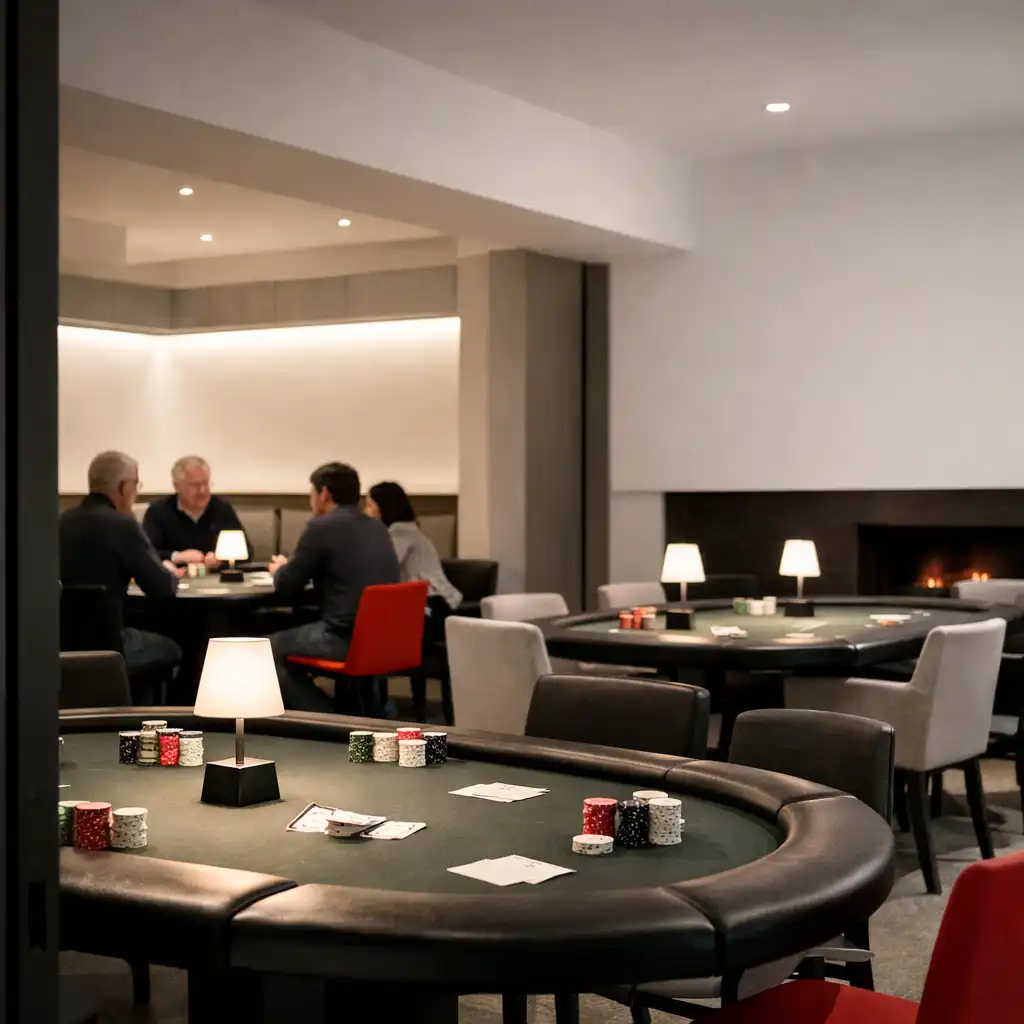
The on-site card room at The Grand Hearth, prepared with physical poker tables.
On-site card-room setting for table evenings
The card room

A room built for attention

The card room is a dedicated on-site setting for Texas Hold’em tournaments, where physical poker tables and a composed pace support attention in the same contemporary environment as the restaurant. The important details are tangible: people sharing a room, cards on a table and conversation that belongs to the immediate setting. The room is not a separate digital service; it is a real place within The Grand Hearth.

Conversation stays in the room

Offline poker here is a social, physical table experience. Players observe turn order, read the table and take part among other guests, with the attention of a physical on-site event held in common.

Part of a broader evening

The card room sits alongside the menu story and restaurant setting as one strand of The Grand Hearth’s hospitality programme.

Explore The Card Room
Table principles

A clear table is a shared courtesy

These principles are considerate guidance for guests joining an on-site tournament evening. They help keep the card room readable, welcoming and connected to the surrounding restaurant environment.

Read the table, not a screen

Tournament participation is centred on the physical table: the dealer, fellow players, cards, chips and spoken cues in the room. Screen-free attention makes those shared details easier to follow. It also gives every guest a direct relationship to the on-site table, without requiring technical knowledge or removing the human pace of the evening.

Keep the pace clear

Clear turn-taking, attentive listening and orderly table conduct help a tournament remain comfortable for everyone in the card room. The pace is easier to understand when guests make room for the dealer’s cues and for one another. This is hospitality language as much as table language: attention allows the shared evening to move without unnecessary friction.

Respect the restaurant setting

The card room belongs to a wider on-site hospitality setting, connected to the dining room and the people moving through it. Treating the table with consideration helps preserve that relationship. To read more about the environment around the evening, visit The Restaurant Setting.

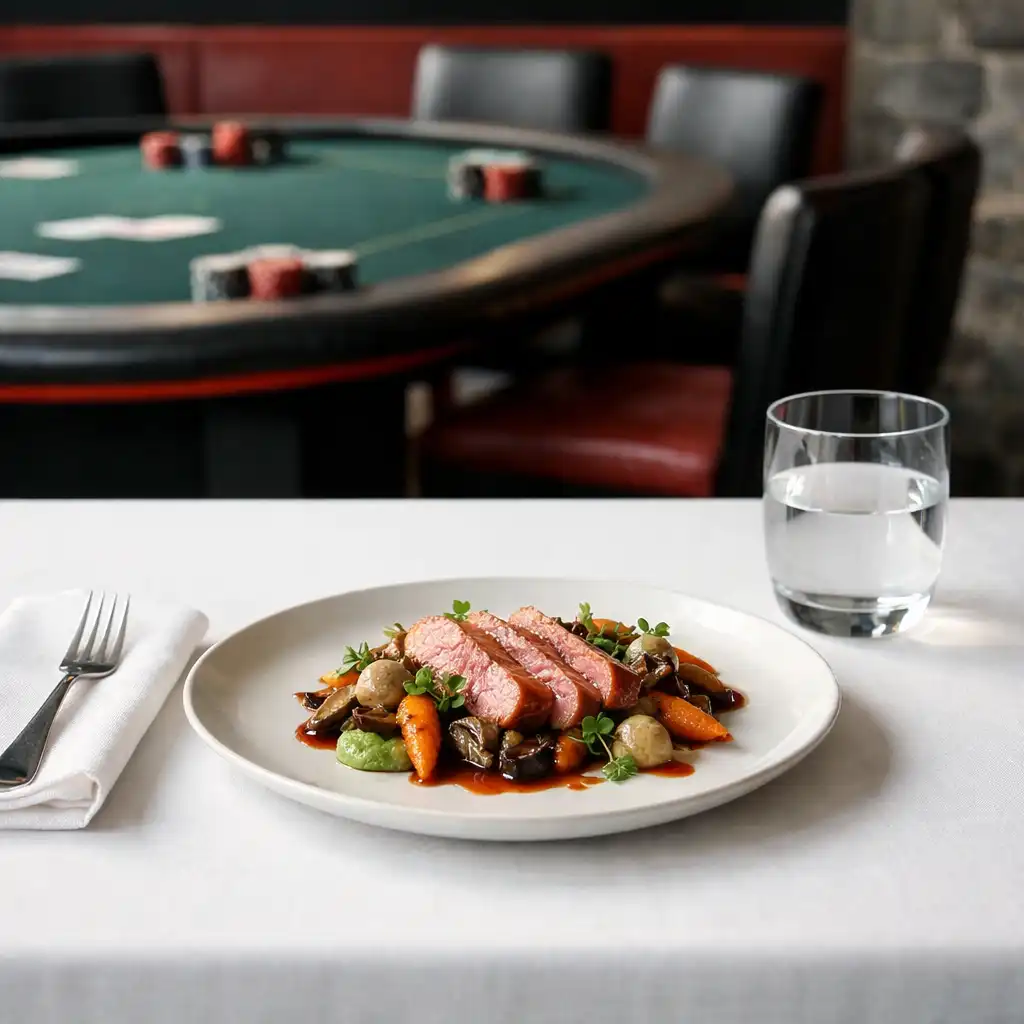
A plated dish in The Grand Hearth restaurant with a poker table softly visible in the background.
Restaurant detail before the table becomes the focus
Menu / setting

The Grand Hearth menu story is a parallel subject to the tournament evening. An evening may move through food, conversation and the physical card-room table without reducing any one part to an afterthought. The restaurant setting gives the room its social texture, while the table gives concentration a clear place. Together, they describe a hospitality experience with distinct subjects held in one venue.

In context

Hospitality and concentration share a room

The Grand Hearth brings restaurant attention and card-table attention into one composed on-site evening. A Texas Hold’em tournament in the card room is not background to the restaurant setting, nor is the setting mere scenery for the table. Both ask for care: the room holds conversation, while the table holds the focused sequence of a shared physical event.

Hands, cards, chips, table edges and exchanged conversation carry the story of offline poker here. They are physical details, visible to the people in the room, and they make the evening legible without spectacle or distance.

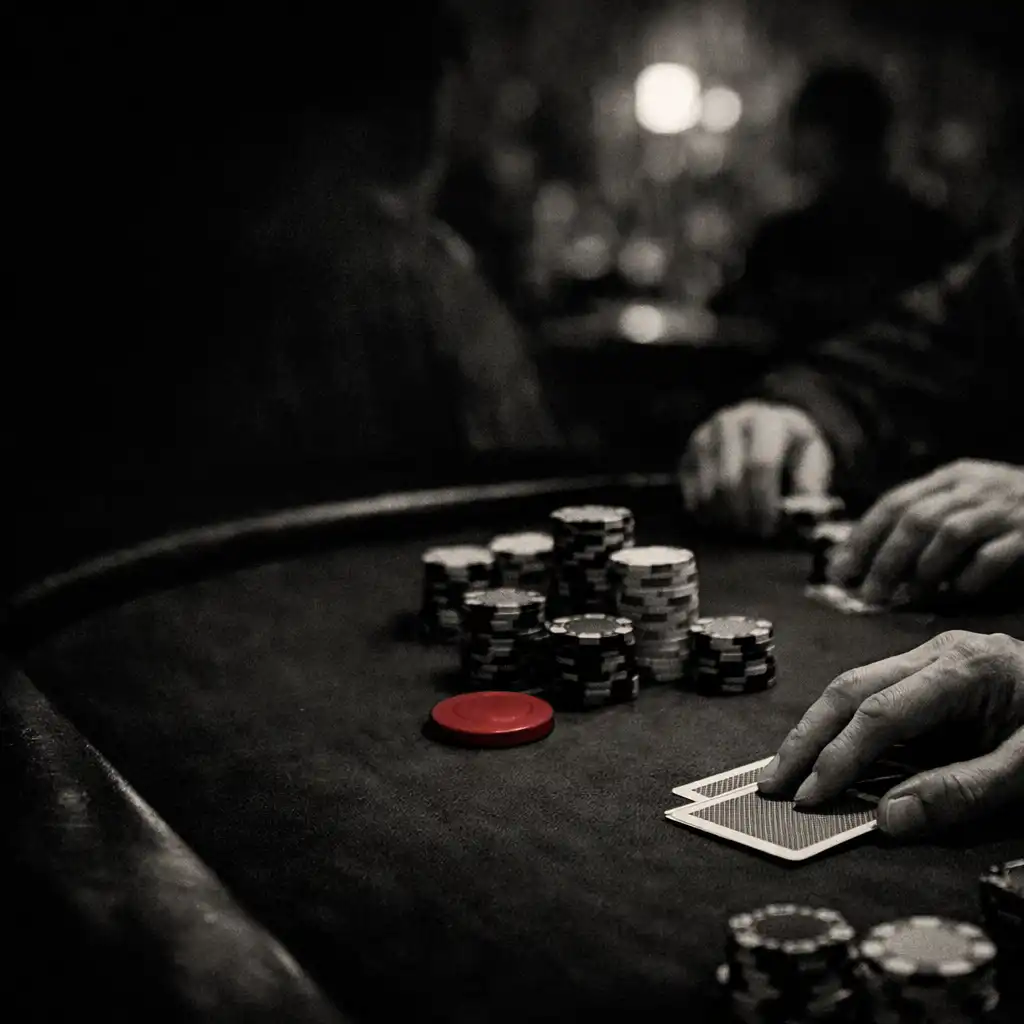
Hands, cards and chips gathered around a physical Texas Hold’em table at The Grand Hearth.
Hands, cards and chips at a physical on-site table
Practical questions

Questions before an on-site evening

Yes. Texas Hold’em Tournaments at The Grand Hearth refer to physical, on-site table events in the venue’s card-room context. The experience is built around real tables, cards and chips, with players and the dealer sharing the same room.

Contact The Grand Hearth

Ask about Texas Hold’em tournaments

Ask about an upcoming physical on-site Texas Hold’em tournament, a card-room evening or a related poker-table format. The Grand Hearth brings these table subjects into a restaurant setting; contact the venue directly for current information about the evening you have in mind.

Email The Grand Hearth
Venue address
18 Hearth Lane, Melbourne VIC 3000, Australia